Friday, December 2, 2011

The cove.


Where is the dolphin slaughter?
How many dolphins are killed at this secret cove a year?
What toxic substance can be found in the dolphin meat?
Why is it that the fishermen are paid the same price to stop the dolphin killing but refuse to do so?
If you go to marineland are you contributing to the dolphin slaughter?

This was a very educational, and a very tragic story. The dolphin slaughter takes place in a secret cove off the coast of Taiji, Japan. Every year approximately 23,000 dolphins are killed in that cove alone. With the remaining dolphin corpse, they donate the meat to schools, where they feed Japanese children. However, there are very detrimental long term effects to such a vile action. There are high amounts of mercury found in dolphin meat that is very toxic to the human body. The thing is, fishermen refuse to stop hunting for dolphins because they claim it is a pest. This has been a "long time" tradition and they refuse to do so. They claim to eat all the other fishes, however the fact of the matter is that the fish are being killed by over fishing.

From first thoughts, I realized that going the marine land is very much supporting this cruel market. However, more and more, I am beginning to understand the importance of education. Without education and learning about dolphins, how can one grow the passion to protect these beautiful creatures? It is through witnessing these majestic animals where the passion and devotion is developed.
There is no right answer to solve this, except to regulate and to stop this cruel treatment to dolphins.

Saturday, November 26, 2011

The importance of Parenting in the nature... nature vs nature!?

(this blog is in substitution for my shark video. i was not there for the shark video so i will blog about the parenting video we saw of other animals!)

The life long debate of nature vs nurture has been in the spot light for centuries. The video seen in class demonstrated that even some animals in the wild (babies) need parenting. It was surprising and very cute to see the parents of the brown bears, penguins, muskox and pandas.

The way the brown bears h
ad to be on a cliff to defend the cubs against the males!

Or to see the penguins wait for the female penguins in hope for food!

Or to see the parents create a circle to protect the young!

Or to see panadas nursing their young!

Parents will always be there. The nurture and the care is really critical for the young!

In nature, we see the effect of nurture.

Trip to the ROM


During our trip, we learned many things from our instructor. She was very knowledgeable and very enthusiastic with her teachings. We learned about dinosaurs, marine life, and about several types of other animals.

The type that intrigued me most was her talk on the coral and marine life. The coral is a very very unique ... creature? The coral is home to over thousands and thousands of marine organisms. However the coral only covers a small percent of the ocean floor.

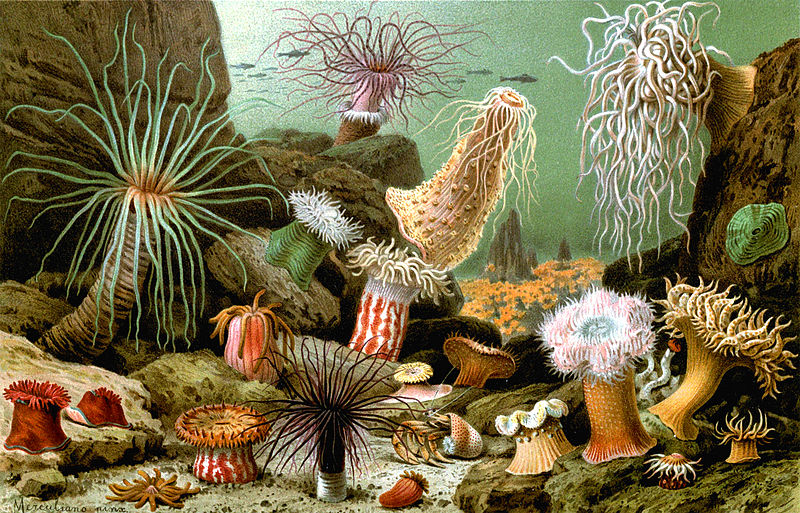
She also mentioned how many "plant" like equivalent live in the coral like the sea anemone. There was this wonderful relationship between them and the clown fish. And there are many more like that within the coral!!!

It was also surprising to know that the sea anemone could move!!! The aquatic life is only a glimpse of how awesome nature can be!

Wednesday, November 9, 2011

Clothespin Lab!!!

who knew that this lab could be so fun. Kevin, Charlie, Mohammed, Peter and I have a lot of fun conducting this lab.

We were expected to fully press a clothes pin as many times as possible for 20 seconds. And we were supposed to repeat this step 6 times, for a total of 7 attempts. And these steps are yet again repeated for the other hand.

Our results show that as time goes on, it is obvious that the subject was getting tired. It was also very suprising that the dominant hand got tired much quicker, but was able to score a higher number for the amount of clicks.

In addition, in both results, there is a sharp rise at the end of the experiment. Our group hypothesizes that as the subject knew that it was the final trial/attempt, there was a psychological effect that influenced him to push harder for a strong finish.

Friday, October 21, 2011

notes!!!! textbook reading 1.3/1.4

Metabolism
1) Energy: the ability to do work
2) metabolism: the sum of all anabolic and catabolic processes in a cell or organism
3) anabolic reaction: reactions that produce large molecules from smaller subunits
4)Catabolic reaction: Reactions that break macromolecules into their individual sub units
5) kinetic energy: energy possessed by moving objects
6) Work: The transfer of energy from one body or place to another
7) THE FIRST LAW OF THERMODYNAMICS
  • The total amount of energy in the universe is constant. Energy cannot be created or destroyed but only converted from on from into another.
8) THE SECOND LAW OF THERMODYNAMICS
  • The entropy of the universe increase with any change that occurs.
9) Bond energy: the minimum energy required to break one mole of bonds between two species of atoms; a measure of the stability of a chemical bond.
  • Bond formed = energy released
  • Bond break = energy absorbed
10) Exothermic reaction: more energy released during bond formation -> net energy output -> exothermic reaction (ex. combustion) (negative delta H value)

11) Endothermic reaction: Energy absorbed in breaking bonds > energy released in formation of product bonds = net absorption energy (positive delta H value)

12) Entropy: A measure of the randomness or disorder in a collection of objects or energy symbolized by S

  • ask Mr. Chung what favoured and not favoured means.
13) Free Energy (Gibbs Free energy): Energy that can do useful work

14) Exergonic reactions: A chemical reaction in which the energy of the products is less than the energy of the reactants; chemist call it an exothermic reaction

15) Endergonic reactions: A chemical reaction in which the energy of the products is more than the energy of the reactants; chemists call it an endothermic reaction

16) ask MR chung about reversible reactions -> why are dead cells reaching equilibrium

17) Hydrolysis: decomposition of a chemical compound by reaction with water

18) Polyphorylation: the process of attaching a phosphate group to an organic molecule

19) LEO GER: Leo (lion) says GER... losing election is oxidation.... gaining election is reduction. This is also known as a redox reaction.

ENZYMES

20)enzymes: protein catalyst

21) Catalyst: Allows reaction to proceed at suitable reates at moderate temperatures by reducing the activation energy (does not affect the free energy change of a reaction)

22) substrate: The reactant that an enzyme acts on when it catalyzes a chemical reaction

23) active site: the location where the substrate binds to an enzyme

24) cofactors: non protein component such as dissolved ions that are needed for some enzymes to function

25) coenzymes: organic nonprotein cofactors that are needed for some enzymes to function

26) competitive inhibitors: substances that compete with the substrate for an enzyme's active site

27) noncompetitive inhibitors: substances that attach to a binding site on an enzyme other than the active site, casing a change in the enzymes's shape and a loss of affinity for the substrate

28) allosteric sites: receptor sites, some distance from the active site or certain enzymes, that bind substances that may inhibit or stimulate an enzyme's activity

29) activator: a substance that binds to an allosteric site on an enzyme and stabilizes the protein conformation that keeps all the active sites available to their substrates

30) allosteric inhibitors: a substance that binds to an allosteric site on an enzyme and stabilizes the inactive form of the enzyme

31) ASK MR CHUNG TO RE EXPLAIN FEEDBACK INHIBITION

Still working on it (:


an order created by anabolic process is accompanied by an even greater disorder caused by energy yielding catabolic processes

Sunday, October 16, 2011

Study notes for the Biotech Test

Blog 4: Top Ten Points I Need to Know About the Biotech Test

1) RFLP
Restriction Fragment Length Polymorphism

RFLP is the comparison of lengths of DNA. Restriction enzymes are used to completely digest the strands of DNA. Furthermore, using gel electrophoresis with a thick matrix, the differences
of the lengths of DNA amongst individuals can then be identified.

  • involves the comparison between the length DNA fragnments between individuals.


2) PCR
Polymerase Chain Reaction

This is a method of DNA replication. It is used to make numerous copies of a desired gene fragment without placing it into a plasmid.
During this method, heat i used to separate the strands of DNA. DNA is subjected to temperature between 94-96 degrees Celsius, causing the hydrogen bonds to break down and separate. The temperature is then brought down to about 50- 60 degrees Celsius. A 5'-3' DNA primer is then added to anneal with the template DNA. After a Taq Polymerase DNA is added at 72 degrees. It adds DNA nucleotides until it reaches the end of the DNA. The processes is repeated until an exponential amount of DNA has been produced.

Heat -> brek hydrogen bond -> cool -> primers -> heat

  • Required during PCR
  • Taq polymerase + 2 DNA primers + dNTPs (Deoxynucleoside triphosphate) + PCR machines

3) Sangers method of Sequencing
This was a method to sequences the genome of a DNA.

First the DNA template must be replicated several times. then a Radioactive primer must be placed on to the strands. then placed into four reaction tubes. Each tube containing a full supply of nucleotides in form of all four dNTPs.

Now in each of these 4 tubes, each one should have a low concentration of the same ddTTP.

the dideoxy analogue blocks further growth of the chain. After placing these sequences
through a gel electrophoresis. we are able to sequence them.

4) Vector cloning

  • Isolate the DNA from the organism with the desired gene.
  • Then the DNA is fragmented with restriction enzymes, generating cuts with sticky ends
  • DNA fragments are incorporated in to bacterial plasmids
  • The plasmid is cut with the same restriction enzyme that generates the same cohesive ends
  • the cohesive ends of the gene and the cut at on the plasmid are joined together by DNA ligase used to form covalent bonds
  • place the plasmid back into the bacterial host.
  • the cells can now be grown or placed in the organism of desire


Tuesday, October 4, 2011

PCR vs Vector cloning and DNA sequencing

compare and contrast the following two methods in biotechnology. Provide 5 points in how they are similar to and/ or different from each other.

(a) PCR vs. Vector cloning.

-the difference between PCR and vector cloning is that protein is important in Vector cloning. In vector cloning, the proteins the desired gene codes for is very crucial. Whereas PCR's function is only to duplicate the amount of desired genes

- both of these methods duplicate the gene of desire

-PCR uses the knowledge of temperatures + Taq polymerase + 2 DNA primers + dNTPs + PCR machines in order to multiply the dna
where as Vector cloning multiplies DNA from the offspring of the "infected cells"

(b) PCR vs DNA sequencing

- DNA sequencing require alot of DNA in order to accurately sequence the DNA

- PCR is often done before DNA squencing